
 251-333-1700
Bone Spicule After Tooth Extraction: Why Bone Is Poking Through Your Gum
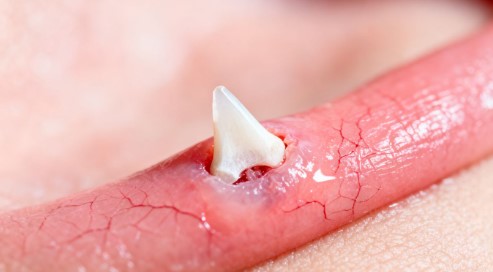
Finding a sharp, hard piece of debris in your mouth after oral surgery can be startling, but understanding the biology behind it often brings relief. What you are likely feeling is a common, though uncomfortable, part of the way the jawbone heals. Patience during recovery matters while your mouth finishes its natural stabilization. At Eastern Shore Oral, Facial & Implant Surgery Center in Fairhope, Dr. Richard Cordero helps patients understand which post-extraction sensations are normal and which deserve a closer look.
What Causes a Bone Fragment to Appear in the Gum After Extraction?
After a tooth is removed, the jawbone enters a remodeling phase to fill the empty socket. Sometimes tiny shards of bone created during the procedure stay behind beneath the gum tissue. These fragments, often called bone splinters or spicules, are not signs of a failed surgery but a common byproduct of the bone healing and settling. As the gums tighten and the bone level stabilizes, these sharp fragments gradually migrate upward through the tissue toward the surface. Following your surgeon's post-extraction instructions supports this process and keeps the site clean while it resolves.
Is a Bone Spicule an Emergency?
Discovering a sharp point might make you fear a serious complication, but it is rarely an emergency. Most patients find these small pieces are simply a nuisance that irritates the tongue or inner cheek. Uncomfortable as it is, a spicule is just part of how your body clears residual debris while it finishes smoothing the socket. Our tooth extraction team can reassure you and, if needed, remove a stubborn fragment quickly.
What a Sharp Bone Sticking Out of Your Gum Actually Means
To tell minor healing symptoms apart from larger concerns, it helps to compare the sensations you might notice during recovery. The table below summarizes what is typical and what warrants a call to your surgeon.
| Symptom | Commonality | Suggested Action |
|---|---|---|
| Small, sharp point visible | Normal | Keep the area clean |
| Mild, localized tenderness | Normal | Use a saltwater rinse |
| Severe, radiating throbbing pain | Unusual | Call your surgeon |
If you experience the sharp, radiating type of pain or significant swelling, the issue may have progressed beyond a simple spicule. Watching these symptoms closely helps you know when watchful waiting is enough and when professional care is the safer choice.
Will a Bone Spicule Resolve on Its Own?
Most surgical sites expel these fragments without any outside help. For many people, the body sheds the piece naturally within a couple of weeks, letting the gum tissue heal completely over the socket. A few simple steps support that natural resolution:
- Perform gentle warm saltwater rinses twice daily to keep the site clean.
- Stick to a soft-food diet to avoid excess pressure on the sensitive area.
- Refrain from poking or pulling at the spot with fingers or toothpicks.
- Take over-the-counter pain relievers for minor discomfort while the fragment surfaces.
If the fragment stays embedded after several weeks of careful home care, or keeps causing significant discomfort, professional removal is straightforward. A surgeon can numb the area and lift the piece out in minutes, providing immediate relief. In cases where a larger area of bone needs protection for a future implant, a socket preservation graft may also be discussed.
How Dental Bone Spur Removal Works
When a spicule needs to come out, the procedure is minor. After a small amount of local anesthetic, your surgeon gently teases the fragment free from the gum and smooths any rough edge of underlying bone if necessary. The whole visit usually takes only a few minutes, and most people feel better as soon as the irritant is gone. According to the American Association of Oral and Maxillofacial Surgeons, dentoalveolar procedures like these are among the most routine performed by oral surgeons.
When to See Your Oral Surgeon About a Bone Spicule
While most fragments clear up on their own, certain signs mean you should reach out for an evaluation. Persistent sharp pain, localized redness that spreads outward, or a developing fever can point to a complication that needs professional attention. Ignoring these signs may lead to prolonged discomfort or secondary tissue irritation that slows your overall recovery. If anything feels off, you can reach us through our contact page to arrange a quick look.
What Happens If You Leave It Untreated
An untreated spicule that the body cannot expel on its own can keep irritating the tongue or cheek, sometimes creating a small sore spot that lingers. In most situations this is uncomfortable rather than dangerous, but a fragment that stays put for weeks is worth having evaluated. Prompt removal ends the irritation and lets the gum tissue finally close over the socket the way it should.
Conclusion
Recovering from an extraction takes patience, especially when a small, sharp bone fragment appears. A bone spicule after tooth extraction is rarely a sign of serious trouble, and most resolve on their own with gentle home care. Staying vigilant and keeping your oral surgeon informed keeps your healing path smooth and comfortable. If a fragment lingers or the pain grows, reach out to our team promptly.
Frequently Asked Questions
Can I pull out a bone spicule myself at home?
Avoid touching or trying to extract the piece on your own. Doing so can break the fragment further or introduce bacteria into the sensitive healing site.
How long does it usually take for these fragments to surface?
Most people notice these tiny pieces emerging within one to two weeks after surgery, as the jawbone begins its primary phase of remodeling.
Will a bone spicule cause a dangerous infection?
In most cases these are simple physical irritants and do not trigger infections, though they can make the surrounding tissue sore until they are shed.
Is it normal to feel multiple bone spicules instead of just one?
Yes. More than one fragment can appear, since the jawbone surface is reshaped in multiple areas during the healing transition of the socket.
How can I tell the difference between a spicule and a dry socket?
A dry socket brings intense, radiating pain from a lost blood clot, while a spicule usually causes a localized, sharp sensation without that deep ache.
About the Author
Eastern Shore Oral, Facial & Implant Surgery Center is an oral and maxillofacial surgery practice in Fairhope, Alabama, led by Dr. Richard Cordero, a diplomate of the American Board of Oral and Maxillofacial Surgery. The practice provides tooth extractions, wisdom teeth removal, dental implants, bone grafting, and anesthesia, with a focus on patient comfort and thorough post-operative care.
Medical Disclaimer
The information provided in this article is for educational purposes only and does not constitute professional medical, dental, or surgical advice, diagnosis, or treatment. If you experience severe pain, spreading redness, or fever after an extraction, contact your provider promptly. Always seek the advice of your dentist, oral surgeon, or other qualified health provider with any questions you may have regarding a medical condition or treatment. Never disregard professional medical advice or delay in seeking it because of something you have read here.
Blog Post Author

Contributed by DentalROI
DentalROI provides relevant dental content to help providers educate patients. The statements, services, and products referenced in this article have not been evaluated by the Food and Drug Administration, and they are not intended as a substitute for professional medical advice, diagnosis, or treatment. Always seek the advice of your dental provider with any questions or issues you may have. Specific recommendations may vary in different circumstances, so individual consultation is important.